Why Your Accountant Suddenly Wants Your Passport (and How Clean Books Make It Easy)
Has your accountant, lawyer or real estate agent recently asked for a copy of your passport or driver licence, details of who really owns your company, or where the money for a deal came from? You're not imagining it, and they're not being nosy. Australia's anti-money laundering rules changed on 1 July 2026, and a lot of the professionals small business owners deal with every day are now legally required to check who you are.
Here's what changed, why it matters to Moreton Bay business owners, and how keeping your books in good shape makes the whole process quicker and less painful.
What changed on 1 July 2026
For years, Australia's anti-money laundering and counter-terrorism financing (AML/CTF) laws mostly applied to banks, casinos and money remitters. The "Tranche 2" reforms extended them to a much wider group of professionals, including:
Accountants
Lawyers and conveyancers
Real estate agents
Trust and company service providers
Dealers in precious stones and metals
The rules don't apply to everything these professionals do. They kick in when they provide what AUSTRAC calls "designated services". For accountants, that includes things like setting up companies and trusts, helping you buy or sell a business, planning a restructure, managing client money, or providing a registered office.
Why they're asking for your ID
When a business provides a designated service, it has to carry out customer due diligence. In plain English, that means:
Confirming who you are, usually with photo ID
Working out who the real owners and controllers of your company or trust are
Understanding where the money in a transaction comes from
Keeping records and reporting anything suspicious to AUSTRAC
Existing clients generally won't be asked to repeat checks just because the rules changed. But if you ask for a new service, like setting up a new entity or selling your business, expect the questions.
AUSTRAC is already enforcing it
This isn't a "maybe one day" rule. In early October AUSTRAC began issuing infringement notices to accounting, real estate and jewellery businesses that hadn't enrolled, with fines of up to $21,840 for companies. Your advisers are taking it seriously because they have to.
What about your bookkeeper?
Day to day bookkeeping, payroll and BAS preparation generally aren't designated services under the new rules. Processing routine payments like wages, super and supplier bills under your authority, as part of normal bookkeeping, isn't usually treated as one either. So most business owners won't find their bookkeeper suddenly asking for a passport.
Where a good bookkeeper really helps is making your accountant's checks easy.
How clean books make due diligence painless
When your accountant or lawyer needs to understand your business for a sale, restructure or new entity, they'll want clear answers. Owners with up-to-date books get through it quickly. Owners with a shoebox of receipts and six months of unreconciled bank feeds don't.
Here's how to be ready:
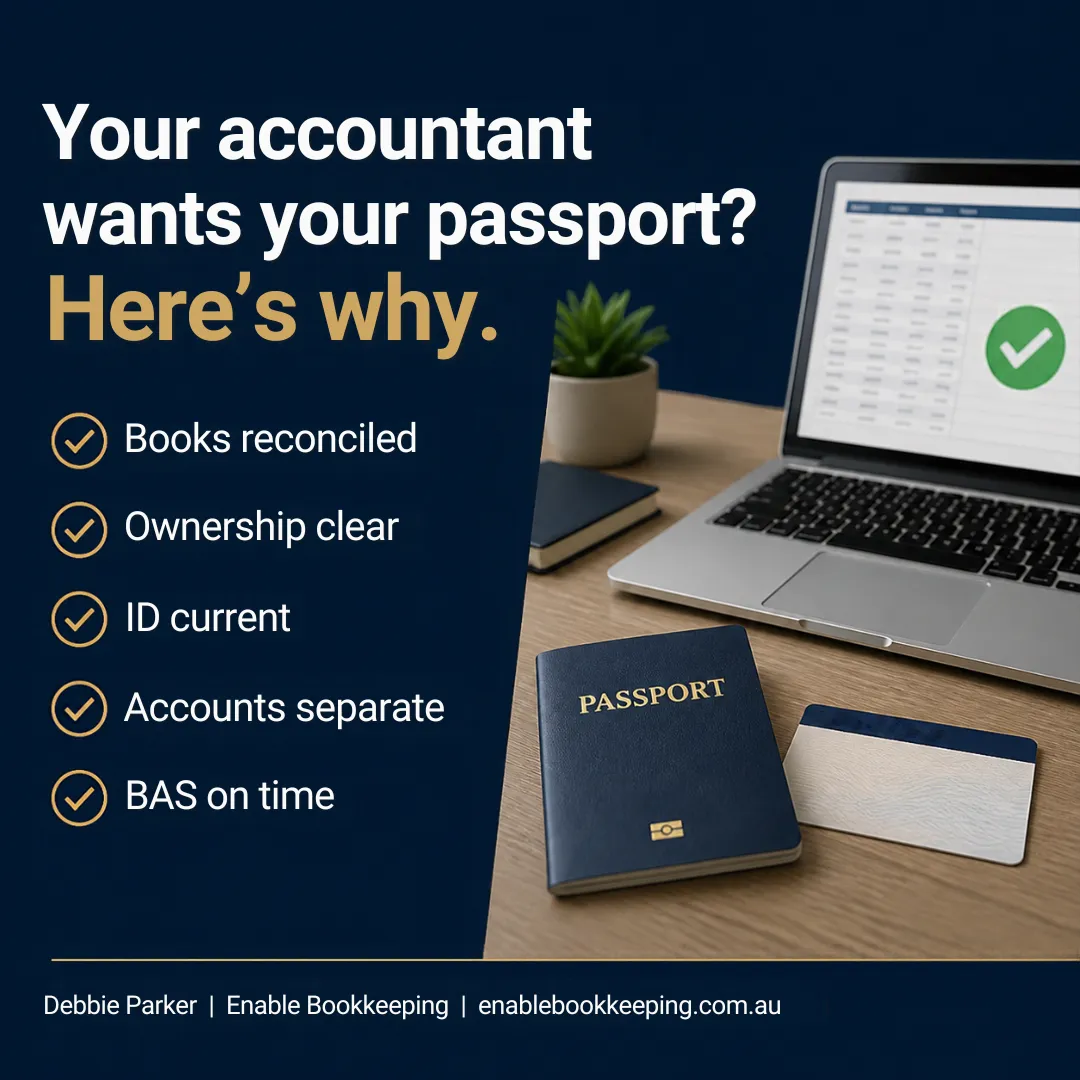
1. Keep your bank reconciliation up to date
Reconciled accounts in Xero, MYOB or QuickBooks make it easy to show where money came from and where it went. That's exactly what source of funds questions are about.
2. Know your ownership structure
Who owns the shares? Who are the trustees and beneficiaries? Keep a simple, current record of your company and trust details so you're not scrambling when asked.
3. Keep your ID current and handy
Check your passport and driver licence are in date. A quick scan saved somewhere secure saves a lot of back and forth.
4. Separate business and personal spending
Mixed accounts raise questions. A dedicated business account, used only for business, keeps your records clean and easy to explain.
5. Stay on top of BAS
Lodging on time with accurate figures builds a clean history. It's one less thing to explain when someone looks closely at your business.
Need a hand getting your books in order?
I'm Debbie Parker, owner of Enable Bookkeeping on Bribie Island. I help businesses across Moreton Bay, from every industry, keep their books clean, reconciled and ready for whatever comes next, in Xero, MYOB and QuickBooks.
With BAS due on 28 October, start with our free 5 minute BAS Prep Checklist. It shows what's done, what's still outstanding and how many days you have left: get the free BAS Prep Checklist.
Or if you'd rather hand it off, book a free chat with Debbie.
This article is general information only and isn't legal or tax advice. If you're unsure whether the AML/CTF rules affect your business, speak with your accountant or lawyer, or use AUSTRAC's self-assessment tool.